


Toscana
Valdichiana's Aglione

Dal sapore delicato e meno intenso dell'aglio, l'aglione viene utilizzato nella cucina toscana sopratutto per la preparazione dei pici all'aglione, piatto gustosissimo e salutare

Le proprietà dell'aglione sono numerose e sono conosciute fin da tempi antichi, è un ottimo antiossidante e antibatterico, oltre ad abbassare il livello di glucosio nel sangue

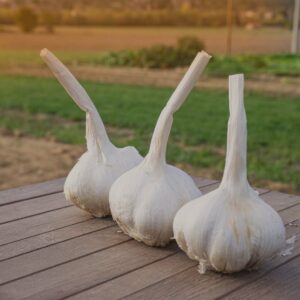
Da non confondere con l'aglio, molto più piccolo e dal sapore deciso e forte. L'aglione può arrivare a pesare anche 1kg, il suo sapore è molto più dolce ed è molto più facile da digerire
Why Valdichiana's Aglione?
Studies, trials and analyses, including work by the universities of Siena and Perugia, have shown that Aglione’s flavor and aroma are not the same when it is grown outside the Valdichiana, where other giant garlics are often mistaken for true Aglione.
tuscan elephant garlic
Aglione in the Kitchen
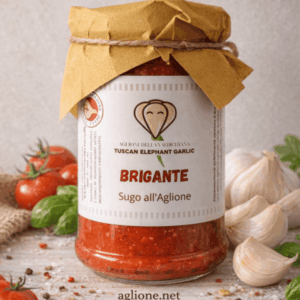
Of all the dishes Aglione is used in, Pici all’Aglione is without doubt the best known.
A hand-rolled pasta, like thick, rustic spaghetti, dressed with a sauce of tomato and Aglione della Valdichiana, in which the garlic is cooked slowly until it melts into the tomato.


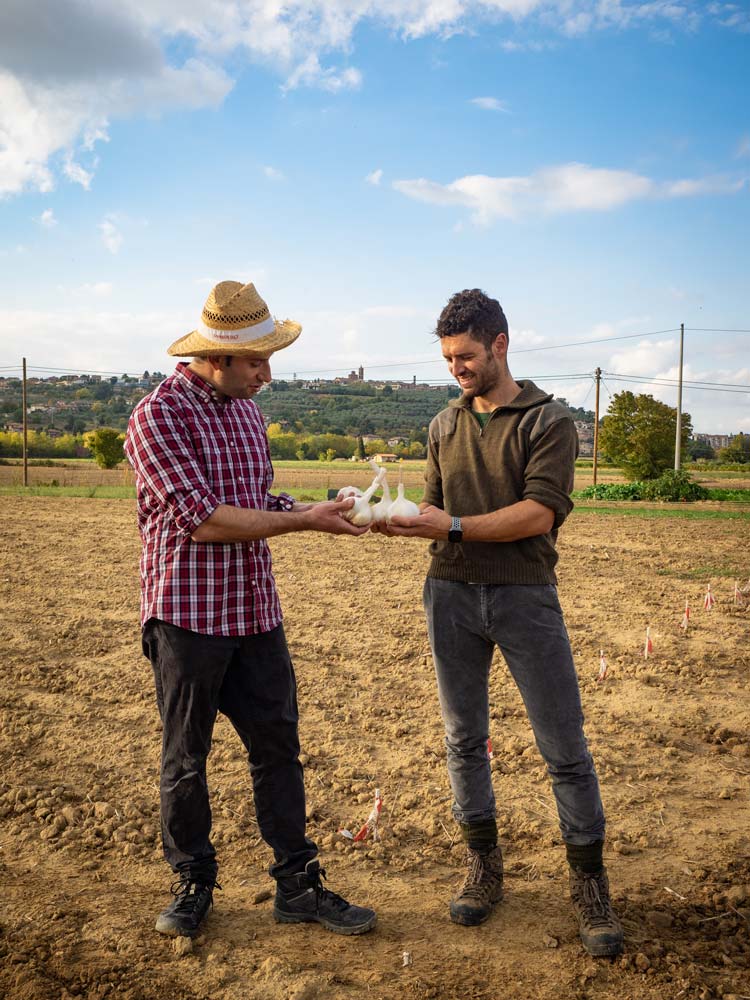
Our Aglione
Known since Etruscan times, Aglione is a plant native to the Valdichiana, in the provinces of Siena and Arezzo, and to a few areas along the border with Umbria.

Properties and Benefits

“Final Nutraceutical Report” (2019), laboratory analyses commissioned by the Association for the Protection and Promotion of Aglione della Valdichiana. Read the report here.
A Treasure of the Valdichiana
The Valdichiana is a valley stretching between the provinces of Siena and Arezzo and reaching into parts of Umbria. People began shaping it in Etruscan times: this ancient civilization was the first to make the valley prosper, through trade and new farming techniques.
The earliest traces of porraccio, a wild leek native to the valley’s lakeside areas, date from that period. Over the centuries, farmers selected the best bulbs, and the result is what we now call Aglione della Valdichiana. Countless traces of the Etruscans survive today in every town of the Valdichiana, including our own Sinalunga.
In time, the Etruscans were supplanted by Rome. Right beneath the fields where we grow our Aglione in Sinalunga runs a Roman road, the Via Cassia Adrianea, built by order of Emperor Hadrian in 123 AD to link Florence and Chiusi.
In the Middle Ages, as people left the valley floor for the safety of fortified hilltop settlements, the valley gradually flooded and turned into lake and marshland. It was this very condition that gave the soil the qualities that make our Aglione extraordinary today. It lasted until the rise of the Florentine Republic. First the Medici and then the House of Lorraine, under the Grand Duchy of Tuscany, pursued vast land-reclamation projects for centuries. These reached their peak under Grand Duke Peter Leopold of Lorraine, whose works have shaped the Valdichiana landscape more than any other: the tree-lined avenues, the pattern of fields and canals, and the distinctive farmhouses with dovecote towers, known as “leopoldine” in his honor.
Our fields lie in Santarello, a small rural district of Sinalunga recorded in the municipal archives as early as 1557, when a resolution authorized one Tommaso di Paulo Terrosi “to burn a field of stubble in the Contrada del Santarello”.
F.A.Q.s
Credit Card
Wire Transfer
For international shipments, you can send a request to info@tuscanelephantgarlic.com